NeckErgonomics: Adapting Head Rotation in HMDs with Predicted Neck Muscle Activity
Date:
Conference talk at ACM Symposium on Spatial User Interaction (SUI 2026), Bari, Italy
I presented our paper NeckErgonomics at ACM SUI 2026 in Bari, Italy, with a pre-recorded talk.

Why the neck?
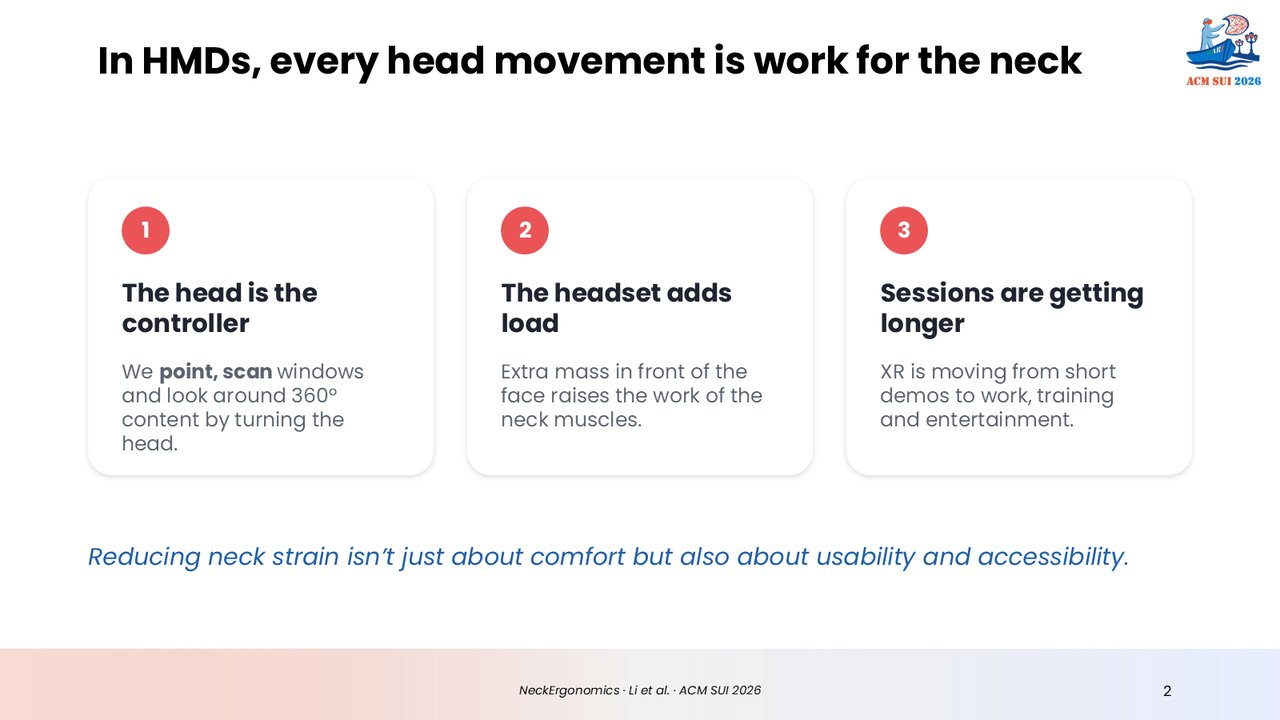
In head-mounted displays, the head is the controller. We point, read and look around 360° content by turning the head, and the headset adds extra load in front of the face. As XR sessions get longer, neck strain becomes a matter of usability and accessibility, not only comfort.
A model of neck muscle activity
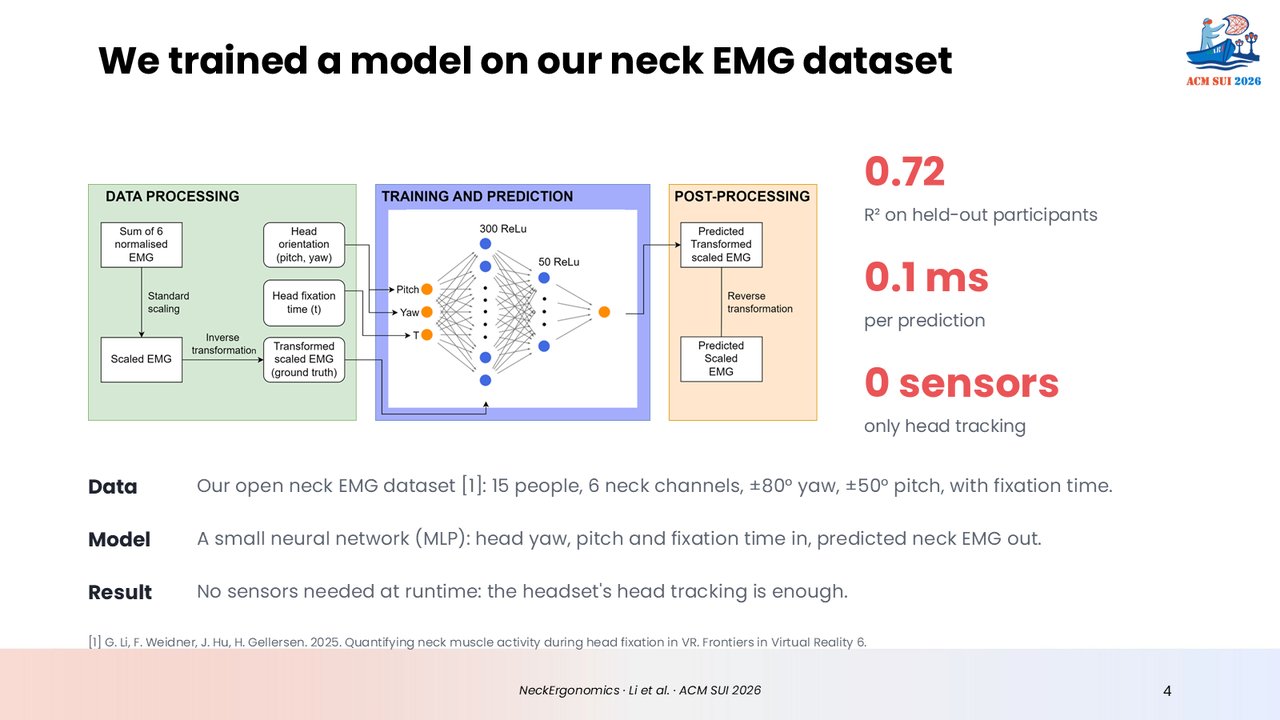
We trained a small neural network on our open neck EMG dataset. It takes head yaw, pitch and fixation time and predicts neck EMG. No extra sensors are needed at runtime: the headset’s head tracking is enough.
One signal, three interaction techniques
The interface helps more when predicted neck effort is high, and behaves normally near the comfortable forward pose.
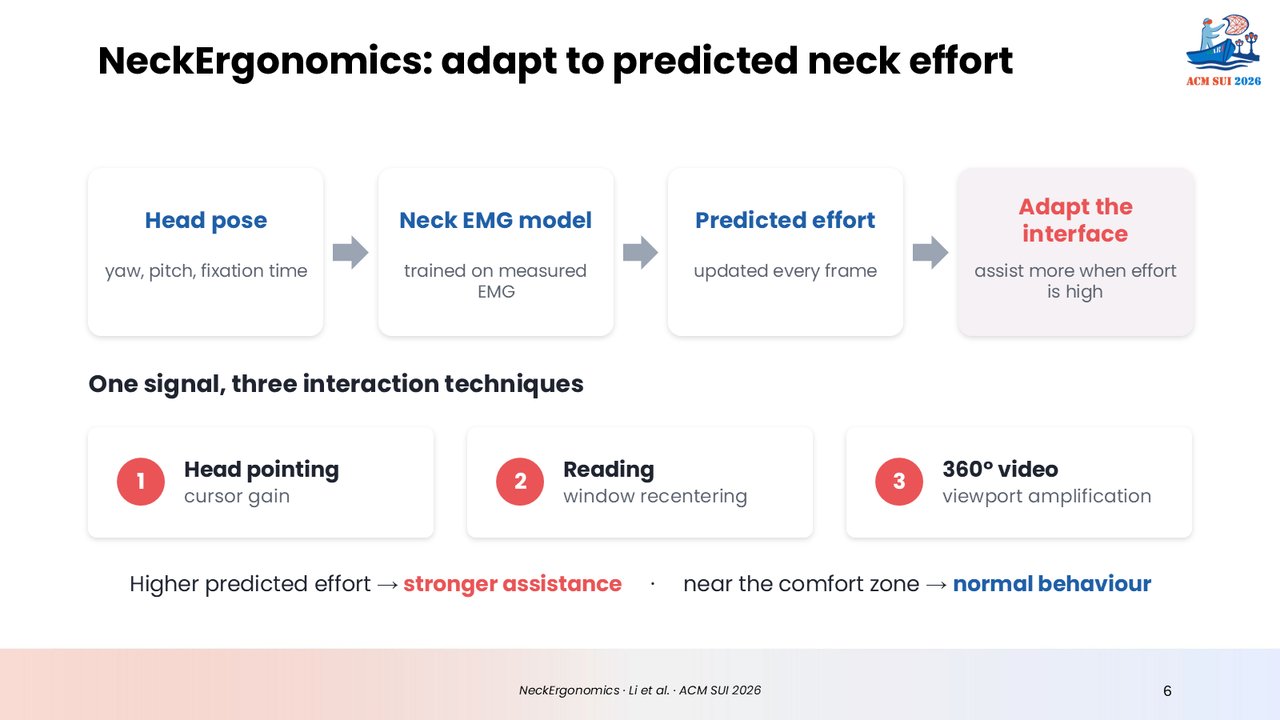
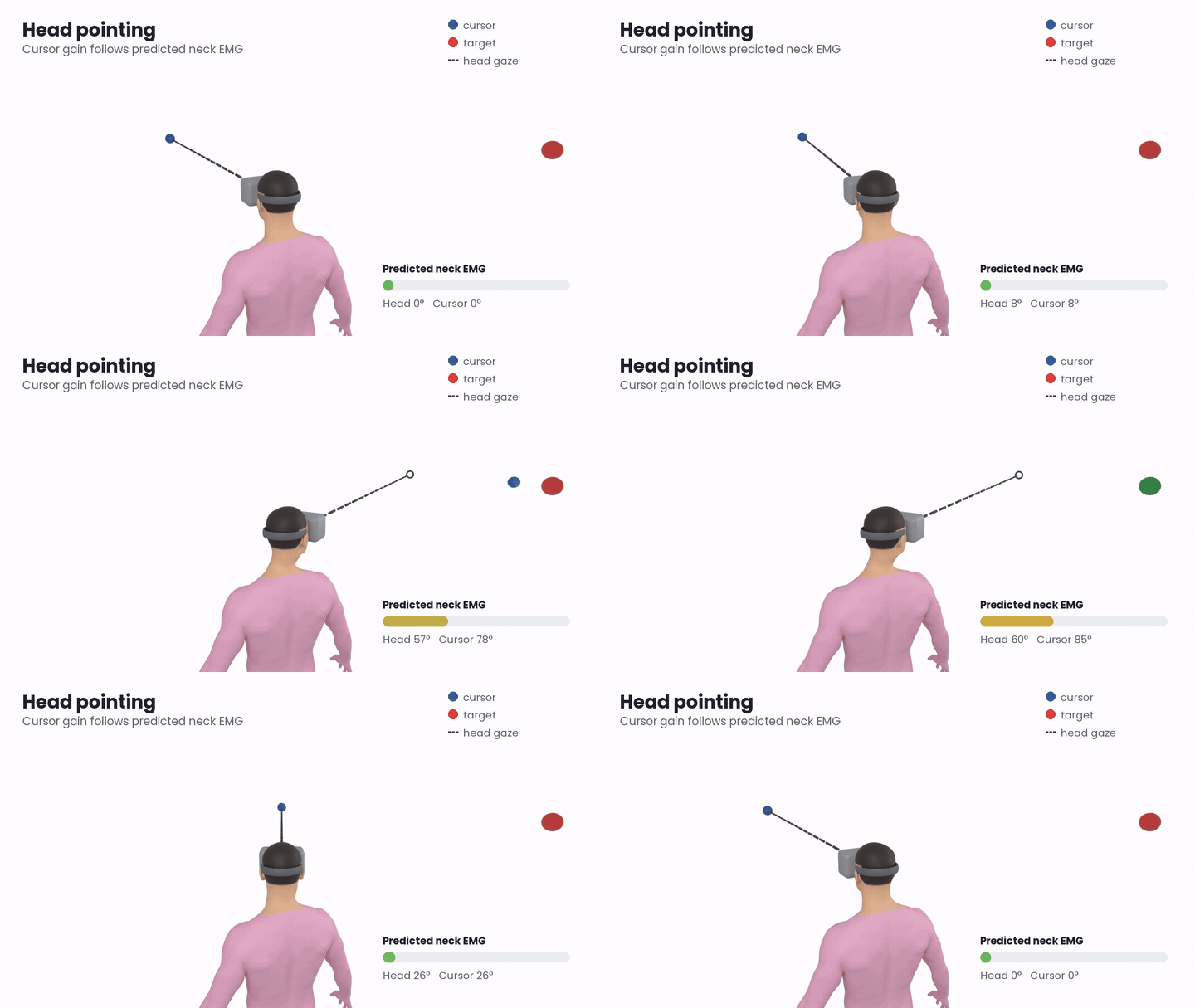
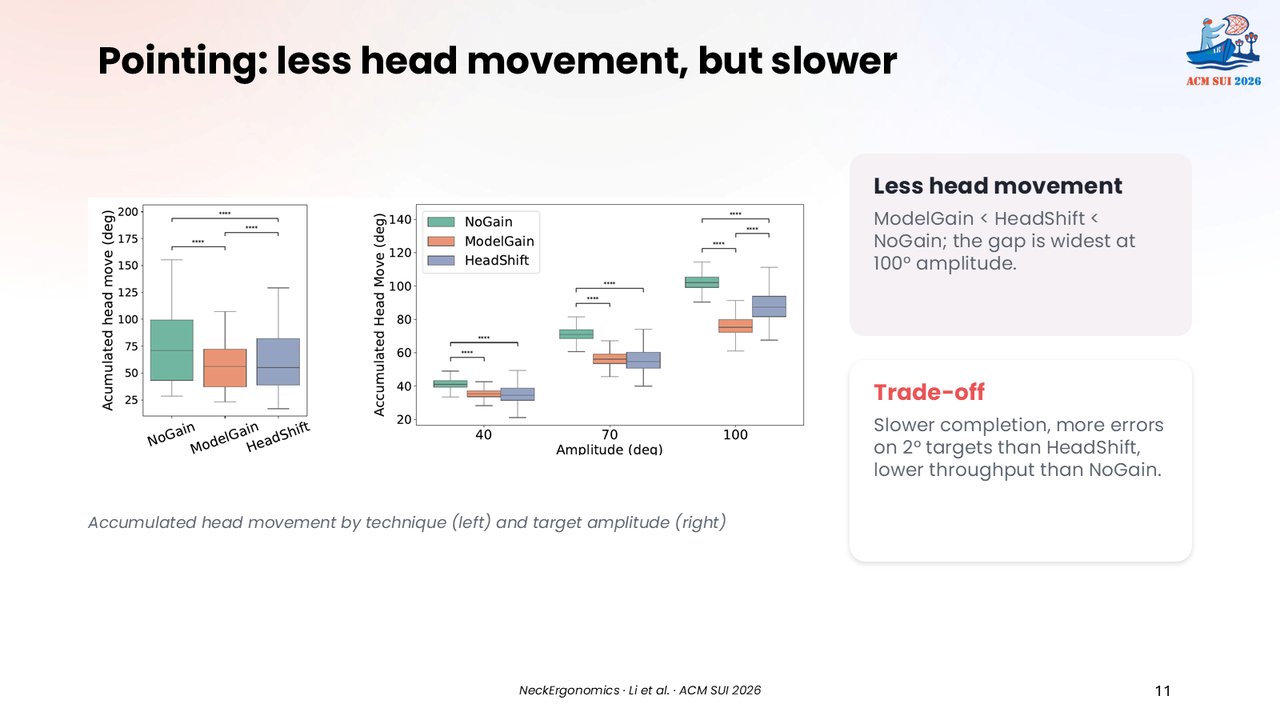
Head pointing: the cursor moves further than the head when turning is costly.
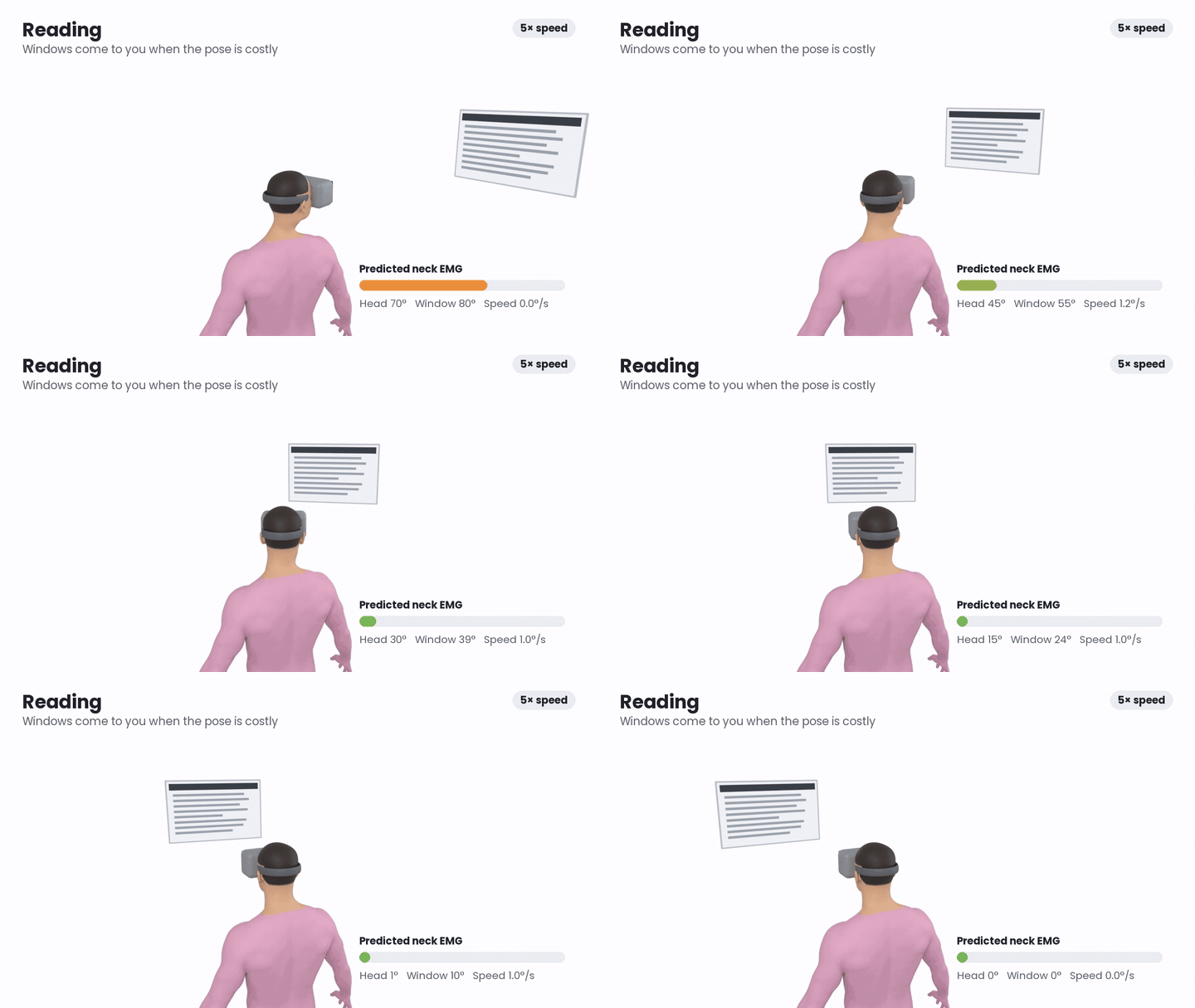
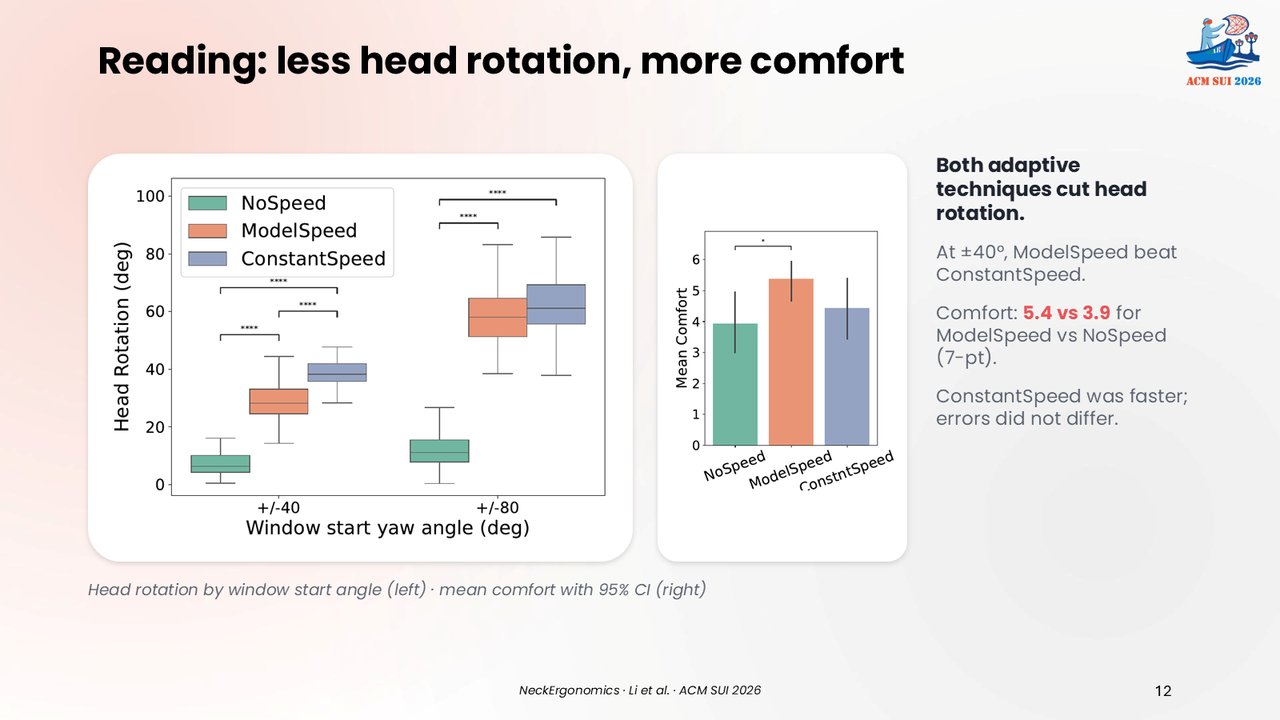
Reading: a window off to the side glides back to the front, so the head can follow it to a neutral pose.
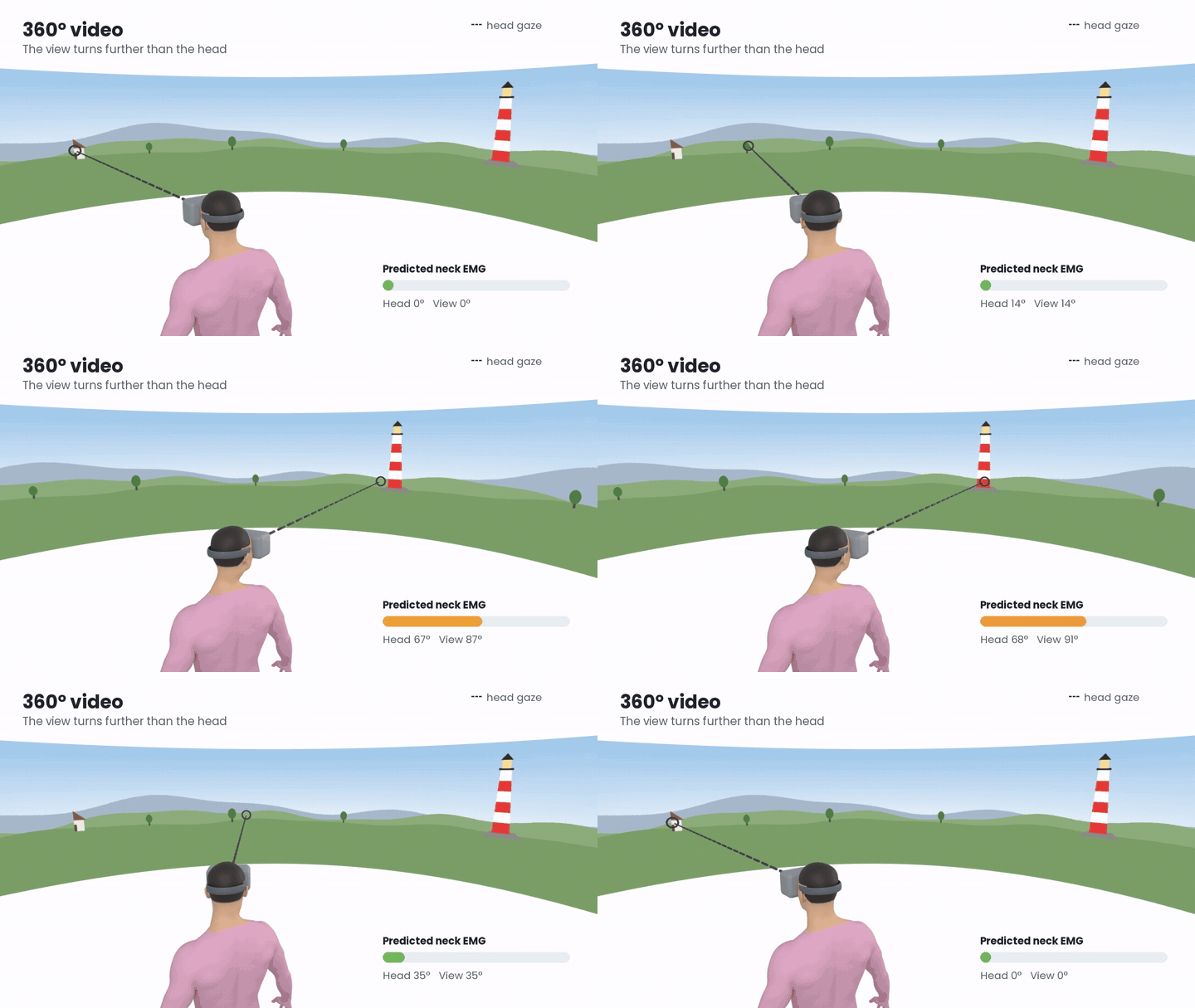
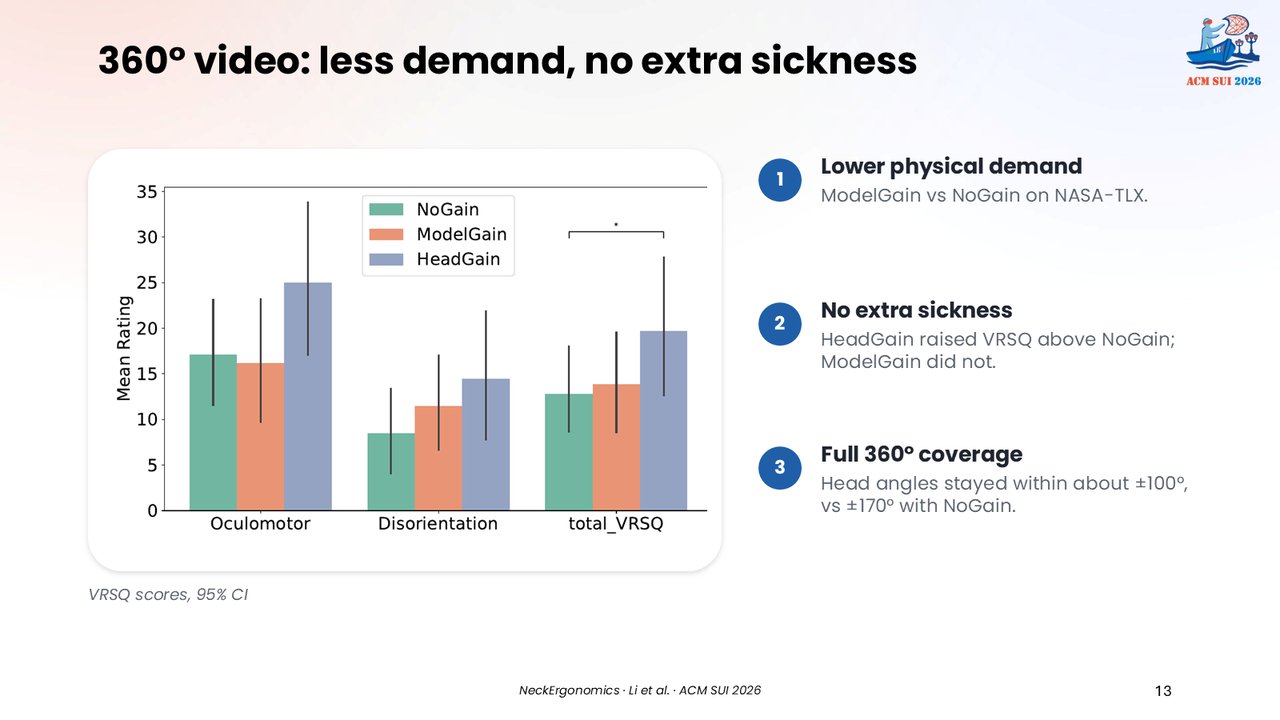
360° video: the view turns further than the head, so you can look behind you without turning all the way.
Study and results
We ran a within-subjects study with 18 participants on a Meta Quest 3, one task per technique.
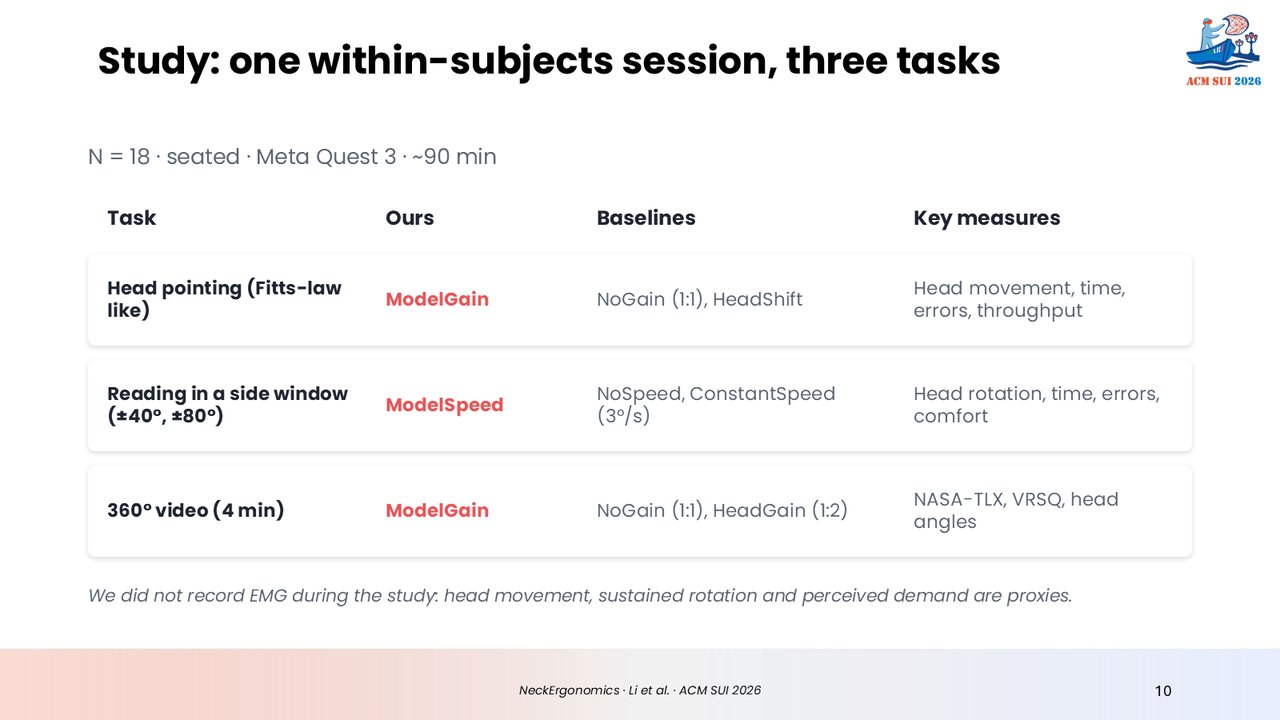
- Pointing: less head movement, but slower and less precise on small targets.
- Reading: less head rotation and higher comfort.
- 360° video: lower physical demand, with no extra sickness.
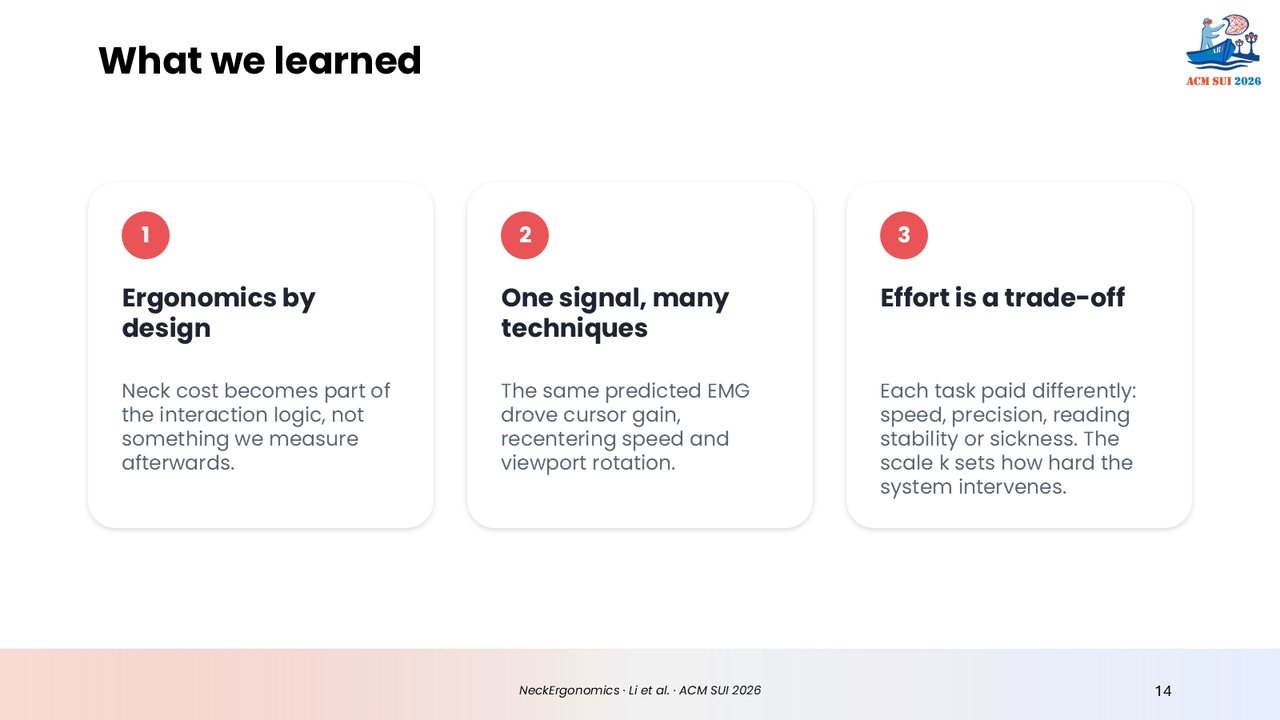
What we learned