Posts by Collection

portfolio

publications

MotionInput v2.0 supporting DirectX: A modular library of open-source gesture-based machine learning and computer vision methods

Published in arXiv preprint, 2021

MotionInput v2.0 is an open-source library that enables gesture-based interaction with existing Windows software using standard webcams. It modularizes computer vision and machine learning methods to map body, hand, and eye movements to mouse and keyboard events.

Recommended citation: Kummen, A., Li, G., Hassan, A., Ganeva, T., Lu, Q., Shaw, R., ... & Gellersen, H. (2021). MotionInput v2. 0 supporting DirectX: A modular library of open-source gesture-based machine learning and computer vision methods for interacting and controlling existing Windows software. arXiv preprint arXiv:2108.04357.
Download Paper
[DC] Neck Muscles in Head-Mounted Displays Interaction

Published in 2025 IEEE Conference on Virtual Reality and 3D User Interfaces Abstracts and Workshops (VRW), 2025

Doctoral Consortium paper investigating neck muscle activity and physical strain during HMD use.

Recommended citation: Li, G. (2025). [DC] Neck Muscles in Head-Mounted Displays Interaction. 2025 IEEE Conference on Virtual Reality and 3D User Interfaces Abstracts and Workshops (VRW), 2025.
Download Paper

Quantifying Neck Muscle Activity During Head Fixation in VR

Published in Frontiers in Virtual Reality, 2025

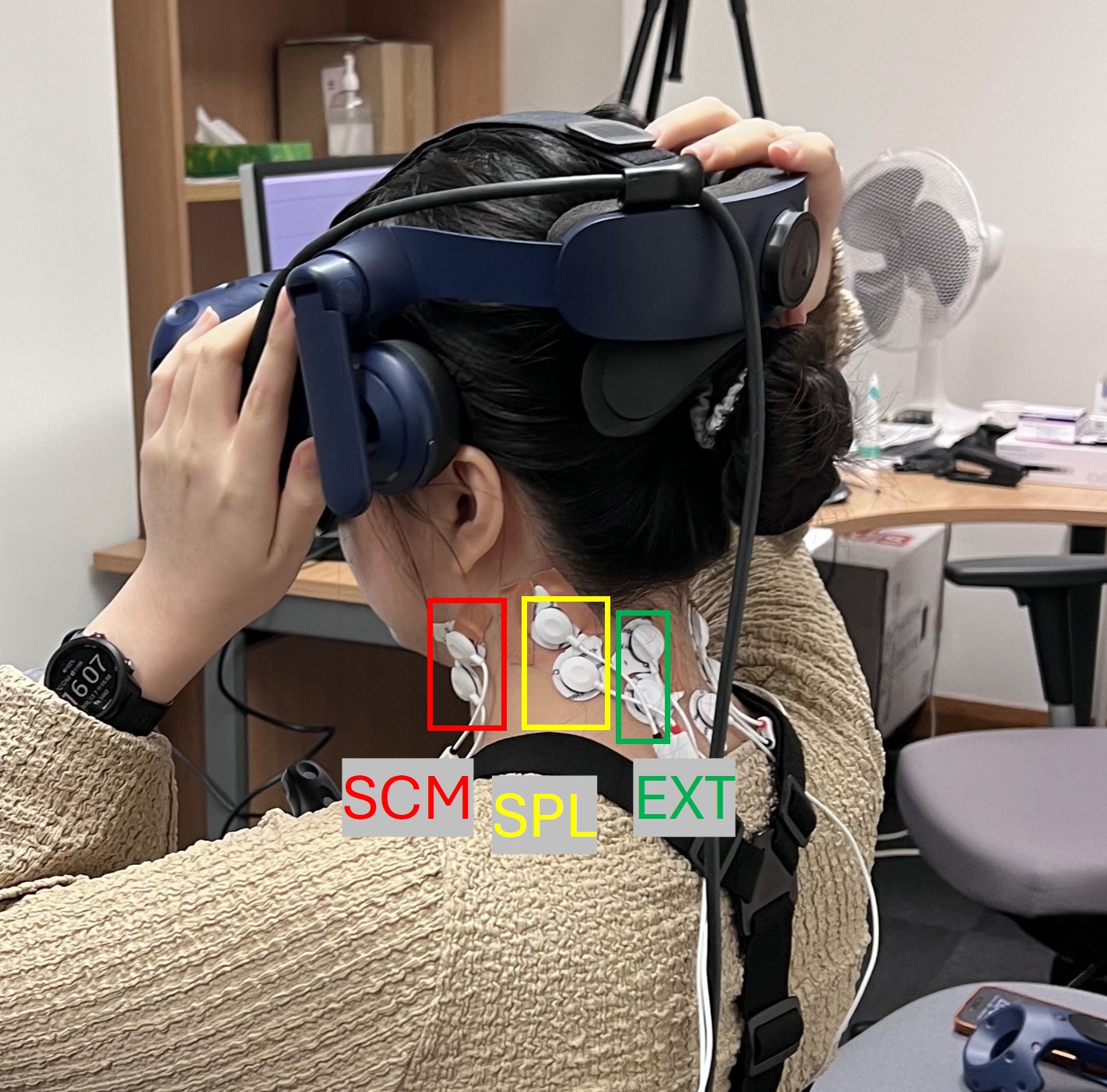
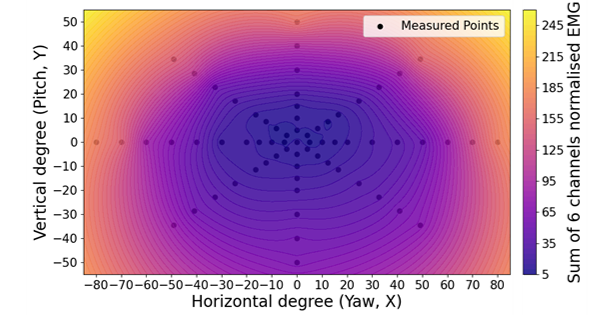
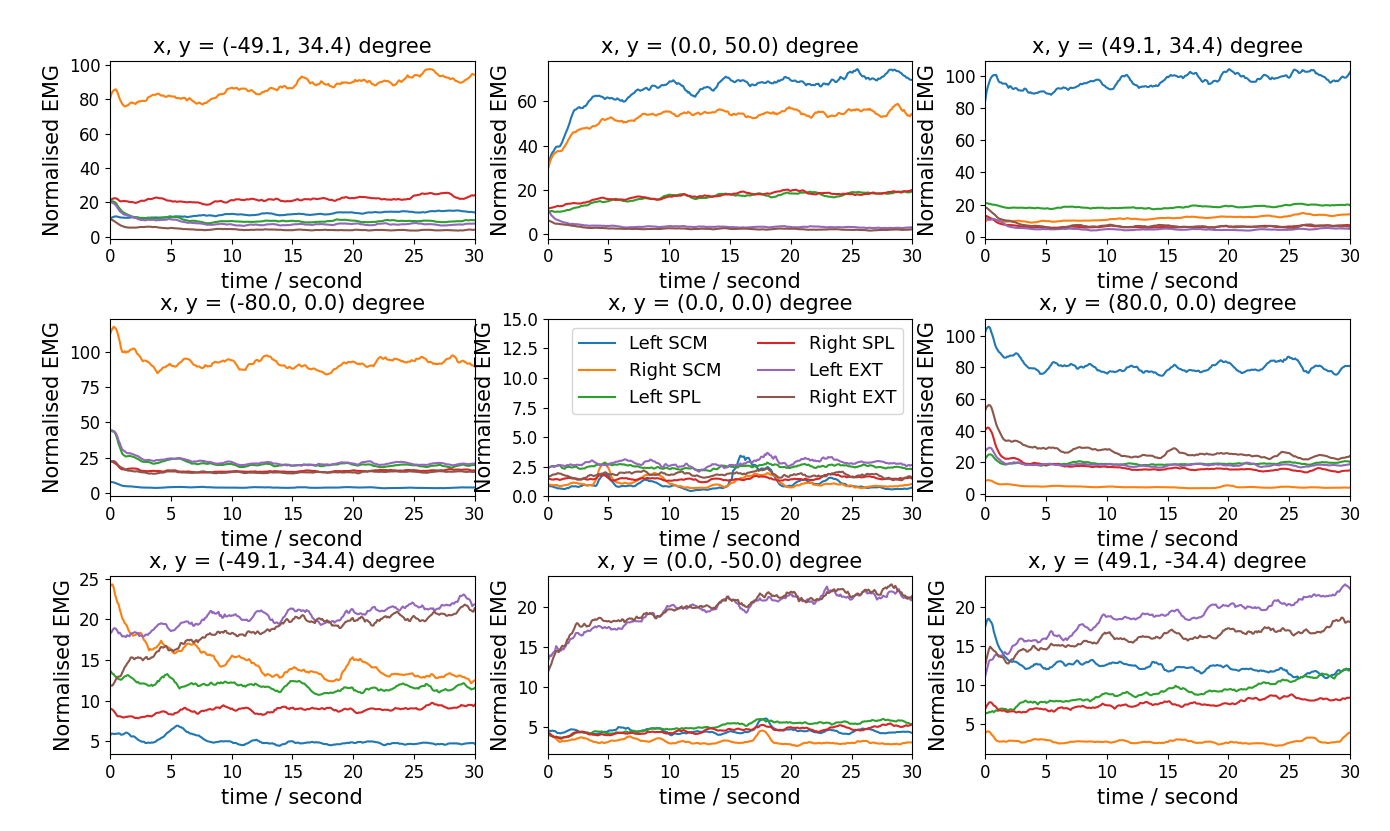
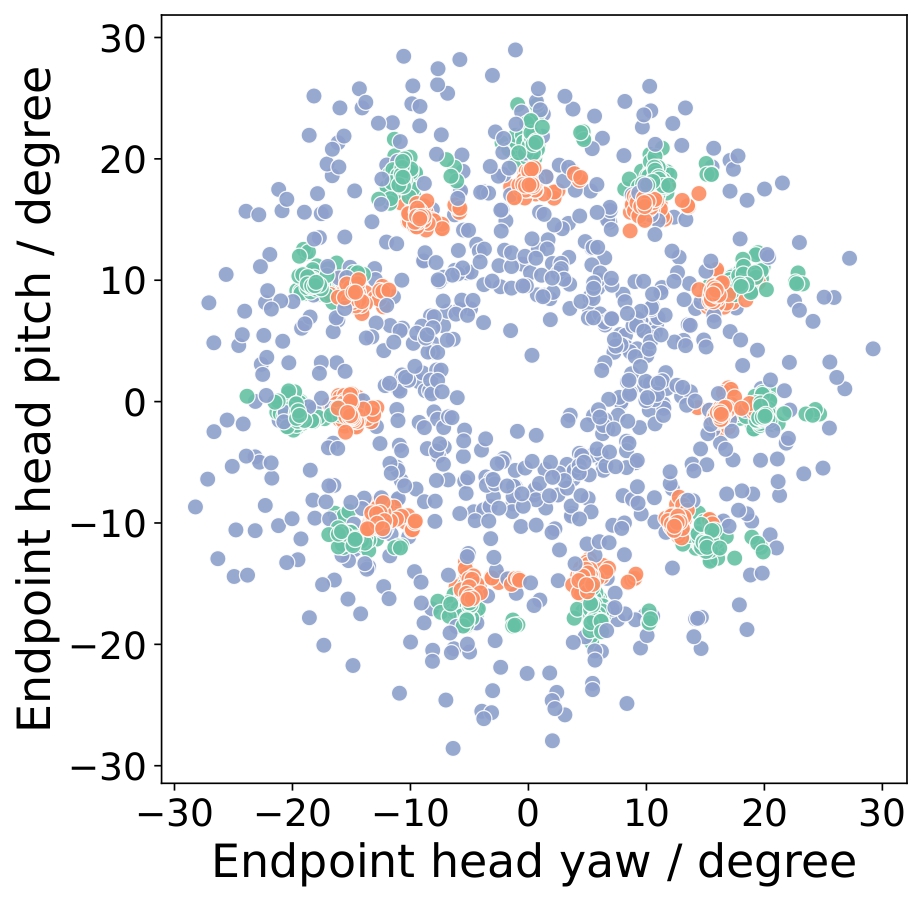
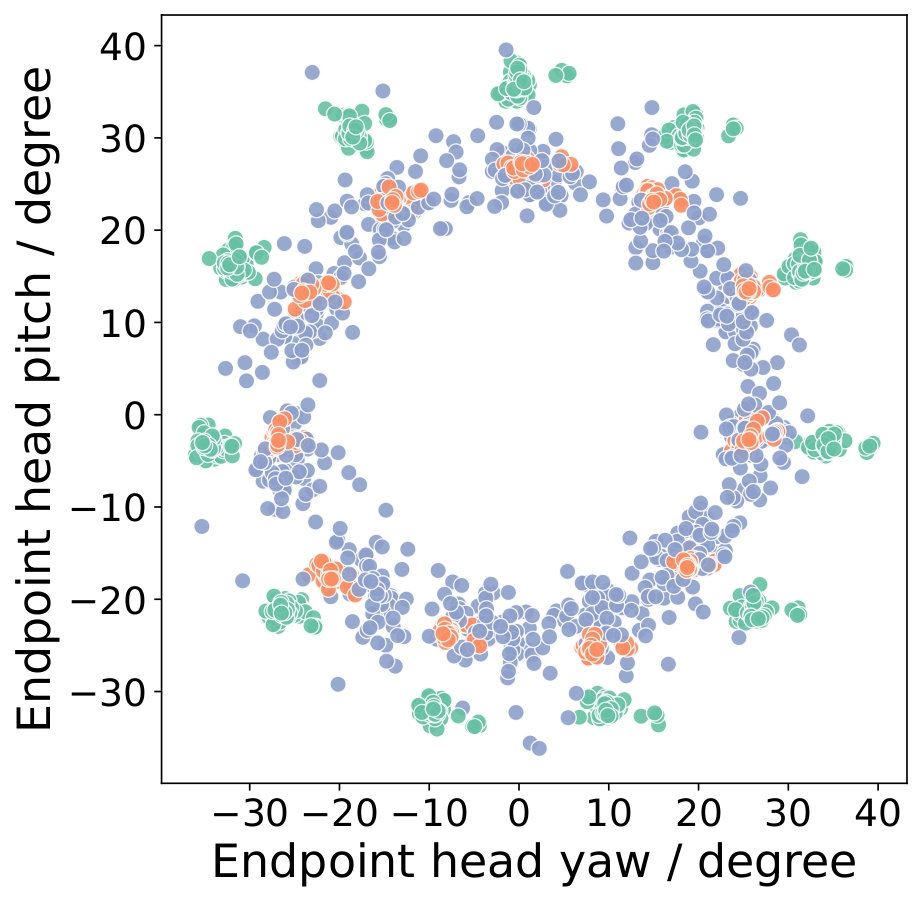
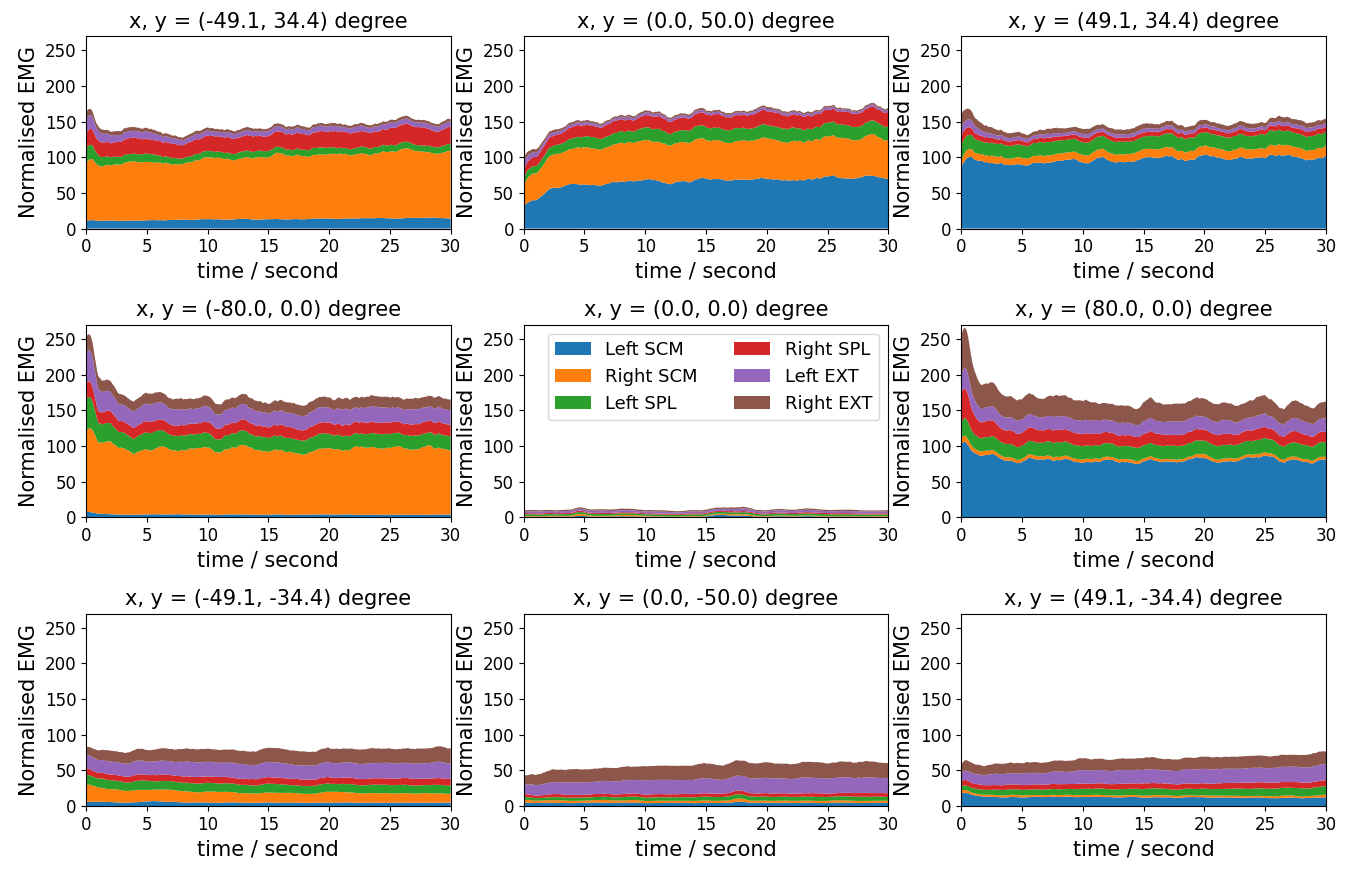
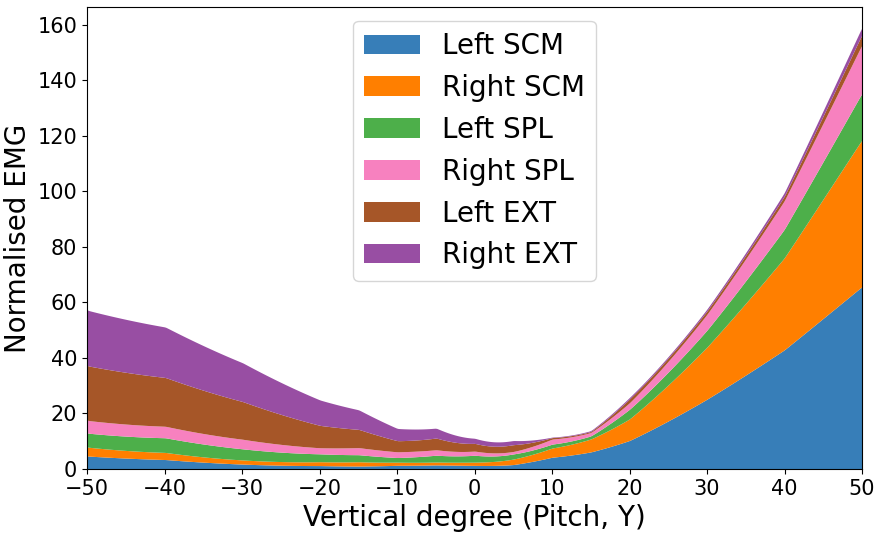
This study provides the first empirical characterisation of neck muscle activity during head fixation in a seated VR task using surface electromyography (sEMG). Results show how muscle workload increases with rotation angle and exhibits distinct temporal dynamics.

Recommended citation: Li, G., Weidner, F., Hu, J., and Gellersen, H. (2025). Quantifying Neck Muscle Activity During Head Fixation in VR. Frontiers in Virtual Reality, 6, 1682866.
Download Paper

Publication figure
Publication figure
Publication figure
Publication figure
Publication figure

StrainGain: Neck Strain Amplifies Head Pointing in VR

Published in IEEE Conference on Virtual Reality and 3D User Interfaces Abstracts and Workshops (VRW), 2026

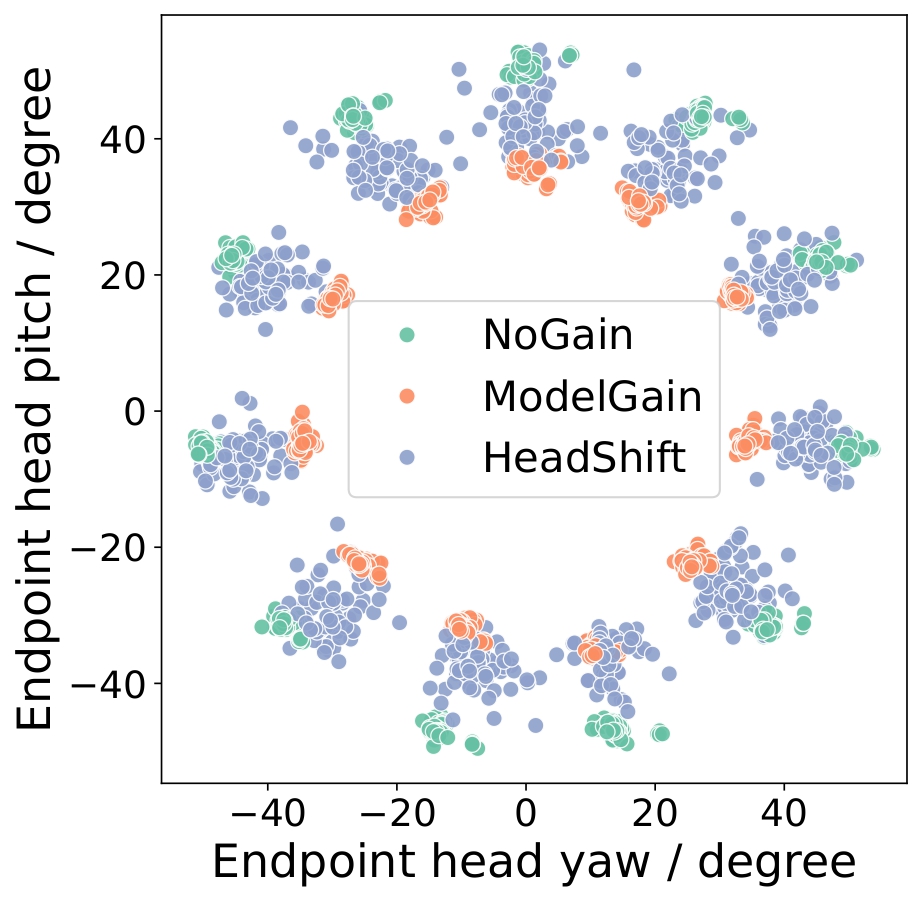
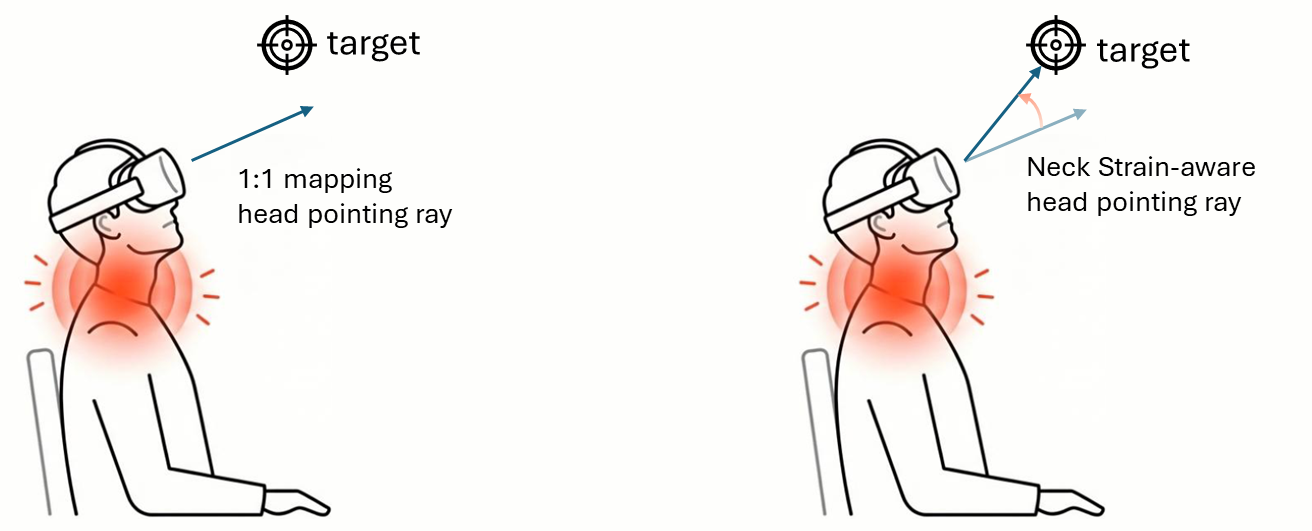
StrainGain is a novel interaction technique that uses neck strain (measured via sEMG) to dynamically adjust the control-display gain of head-pointing cursors in VR, improving targeting speed and precision.

Recommended citation: Li, G., Weidner, F., and Gellersen, H. (2026). StrainGain: Neck Strain Amplifies Head Pointing in VR. 2026 IEEE Conference on Virtual Reality and 3D User Interfaces Abstracts and Workshops (VRW).
Download Paper

Publication figure
Publication figure
Publication figure
Publication figure

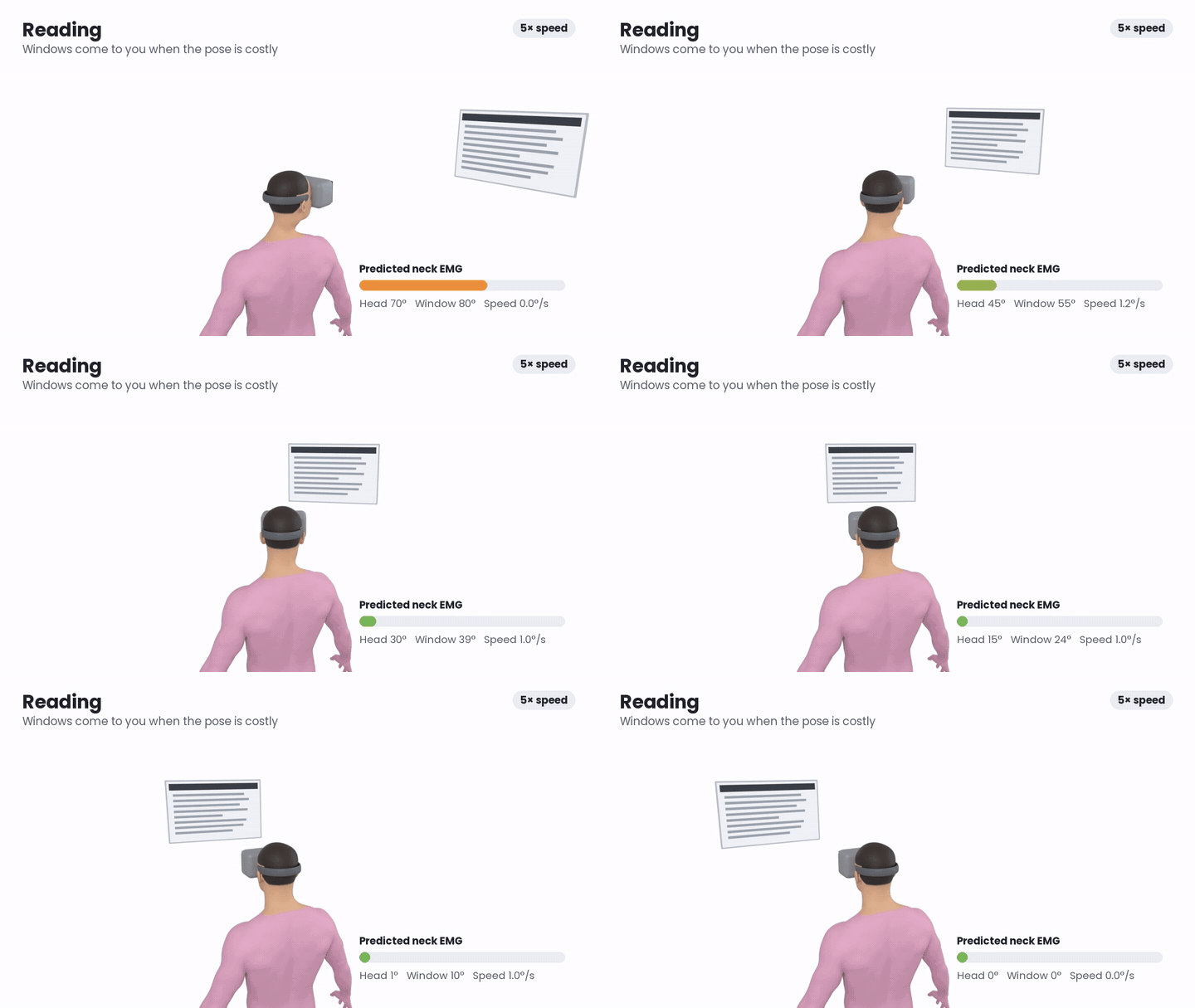
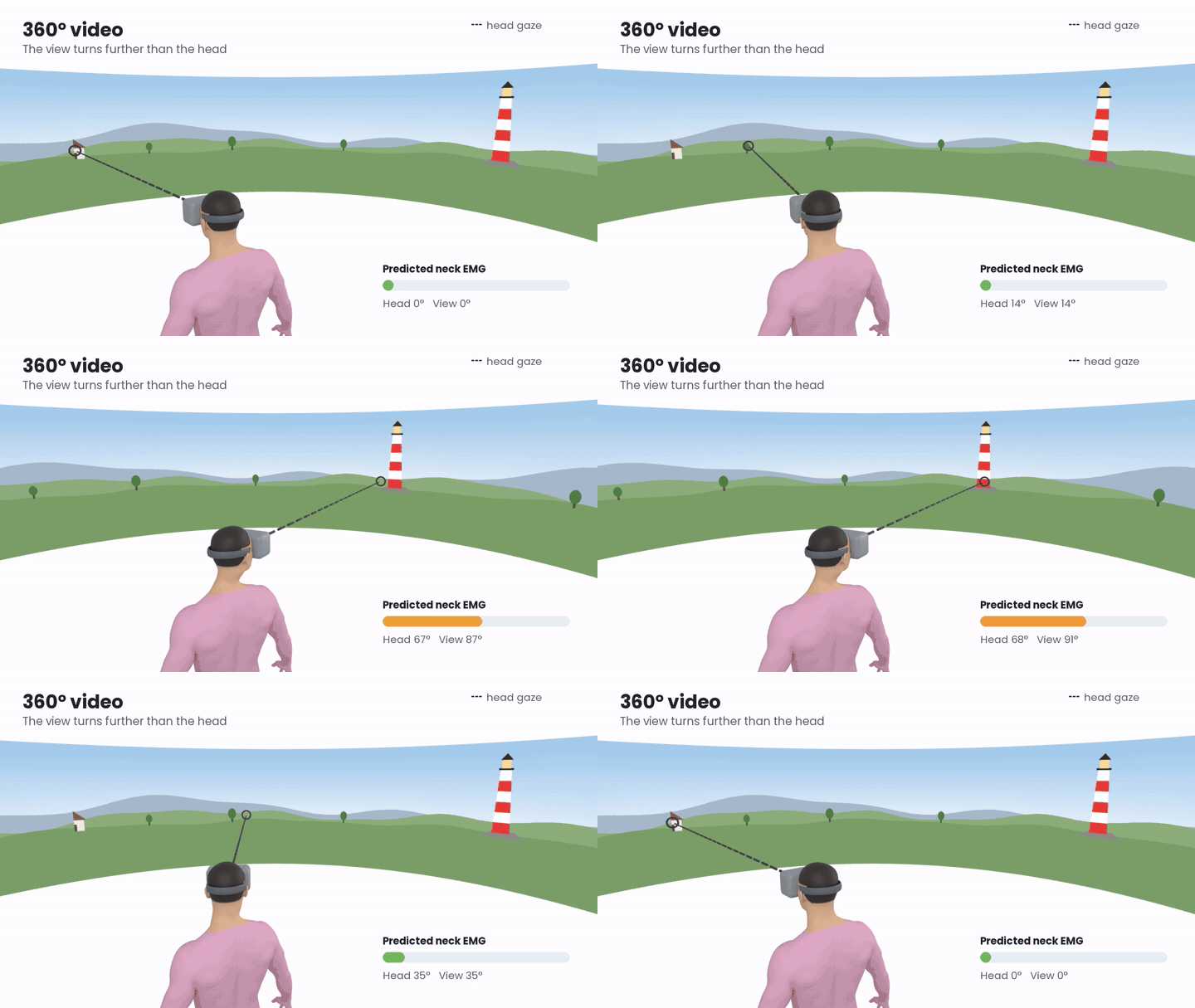
NeckErgonomics: Adapting Head Rotation in HMDs with Predicted Neck Muscle Activity

Published in ACM Symposium on Spatial User Interaction (SUI '26), 2026

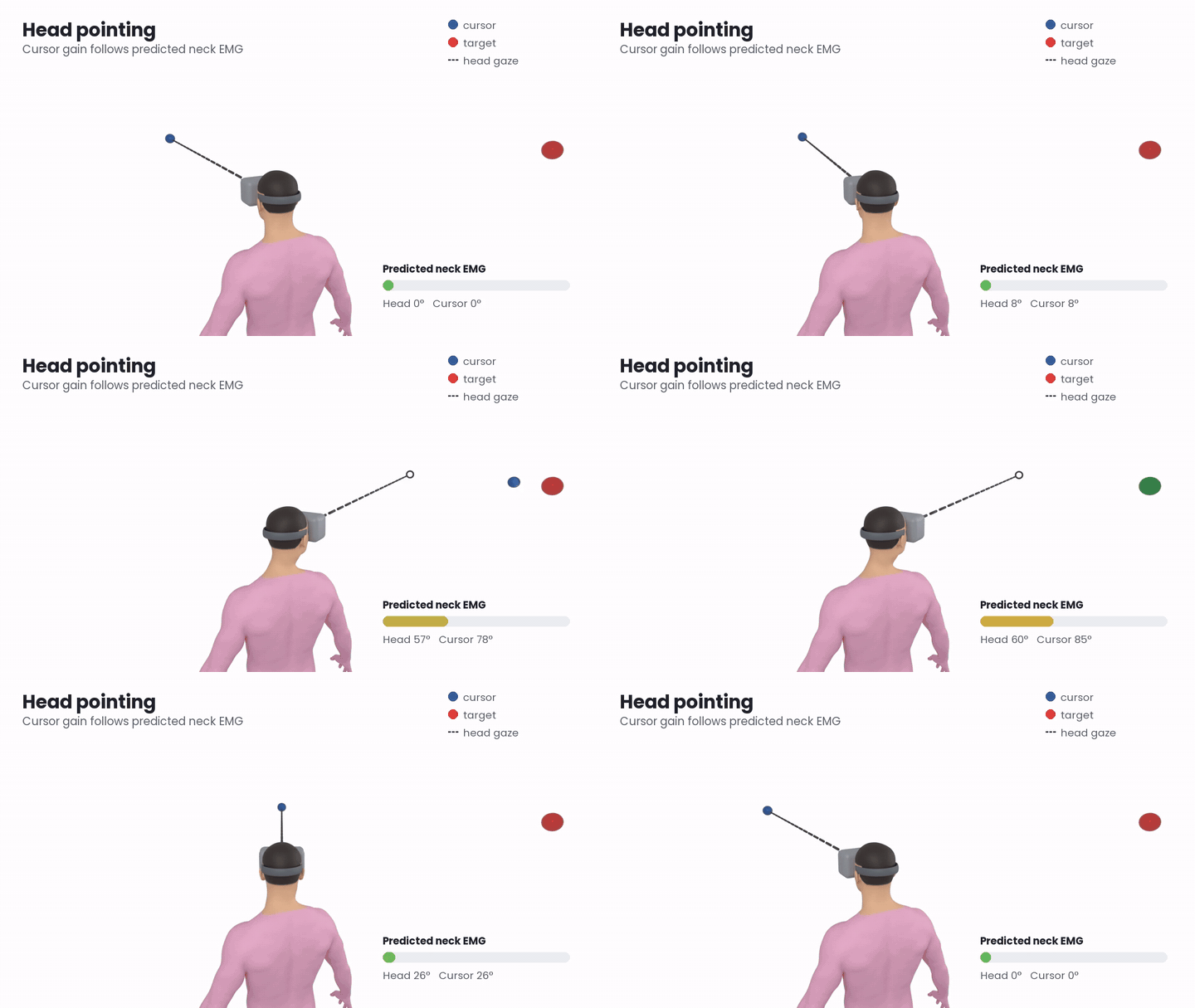
NeckErgonomics adapts head-mounted display interactions using predicted neck muscle activity, reducing head movement, sustained rotation, and perceived physical demand across three VR tasks.

Recommended citation: Li, G. X., Weidner, F., Khan, A. A., Wang, H., Hu, J., and Gellersen, H. (2026). NeckErgonomics: Adapting Head Rotation in HMDs with Predicted Neck Muscle Activity. In ACM Symposium on Spatial User Interaction (SUI '26).
Download Paper

Publication figure
Publication figure
Publication figure

talks

Quantifying Neck Strain in VR/HMD Use

Published:

I presented my work at the AlpCHI 2026 workshop ‘Beyond Fatigue: Building an Ergonomic Future for XR’, sharing findings on neck strain in VR/HMD use and what they mean for interaction design.

teaching